
Marketing is a collection of tasks related to products, prices, distribution, advertising, marketing, brand development, market research, sales strategy research, customer care, customer psychology, sales, measuring effectiveness,…
Some main parts of marketing are: advertising, direct marketing, market research, customer service, public relations, distribution, product pricing, sales, and media planning.
6. Types of modern marketing (as shared by Pham Dinh Quan)
6.1. Distinguish between Non-Digital Marketing, Digital Marketing, Offline Marketing and Online Marketing.
Currently, people mainly do marketing in two main forms: Non-Digital Marketing (regular marketing – without digital) and Digital Marketing (digital marketing). To clearly understand these two types of marketing, we need to deeply understand the nature of the word Digital in the concept of Digital Marketing.
So what exactly is digital marketing? (according to Pham Dinh Quan’s opinion)
“Digital marketing, the promotion of products or brands via one or more forms of electronic media” – SAS Software & Rasmussen College.
“Electronic media are media that use electronics or electromechanical energy for the end user (audience) to access the content. This is in contrast to static media (mainly print media), which today are most often created electronically, but do not require electronics to be accessed by the end user in the printed form” – Wikipedia EN.
- (1) Using electronic energy is understood as using the digital environment, including technologies or platforms such as websites, emails, phone applications, social networks, etc.
- (2) Using electromechanical energy is understood as using electronic (digital) devices such as televisions, radios, phones, outdoor advertising LED screens, virtual reality glasses, etc.
Electromechanical is a compound word of electronic and mechanical, here referring to the use of electronic equipment.
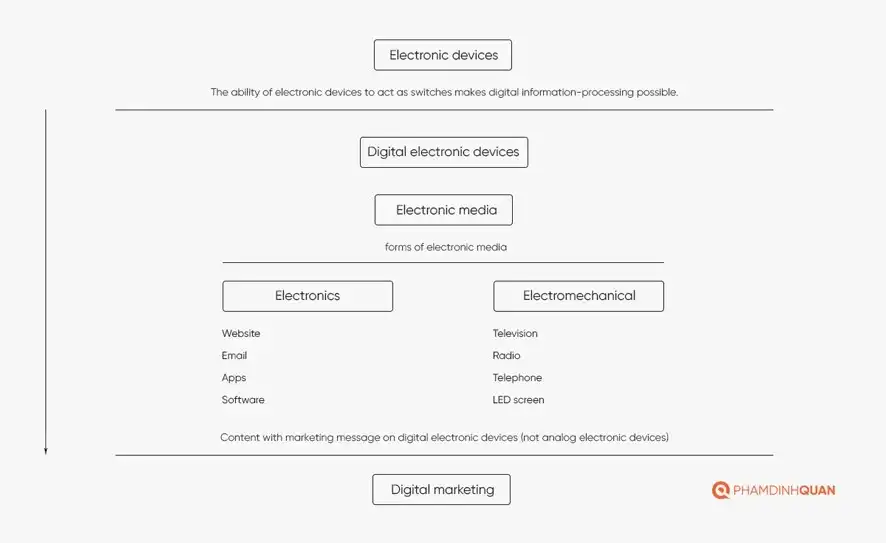
Figure 6: diagram depicting the definition of electronic communication. @Pham Dinh Quan
We often refer to digital marketing with powerful online advertising channels such as Facebook Ads, Google Ads or email marketing campaigns, and affiliate marketing, but forget that the nature of digital marketing is marketing on digital platforms, and Digital technology certainly does not appear only on the internet.
Based on that confusion, we often divide modern marketing into two main types: Offline Marketing and Online Marketing. This opinion is not really correct but is only limited to a certain scope.
Modern Marketing must be divided into two types: Non – Digital Marketing (regular marketing – without digital) and Digital Marketing (marketing with digital technology), and within digital marketing, it is divided into Digital Offline Marketing and Digital Online Marketing.
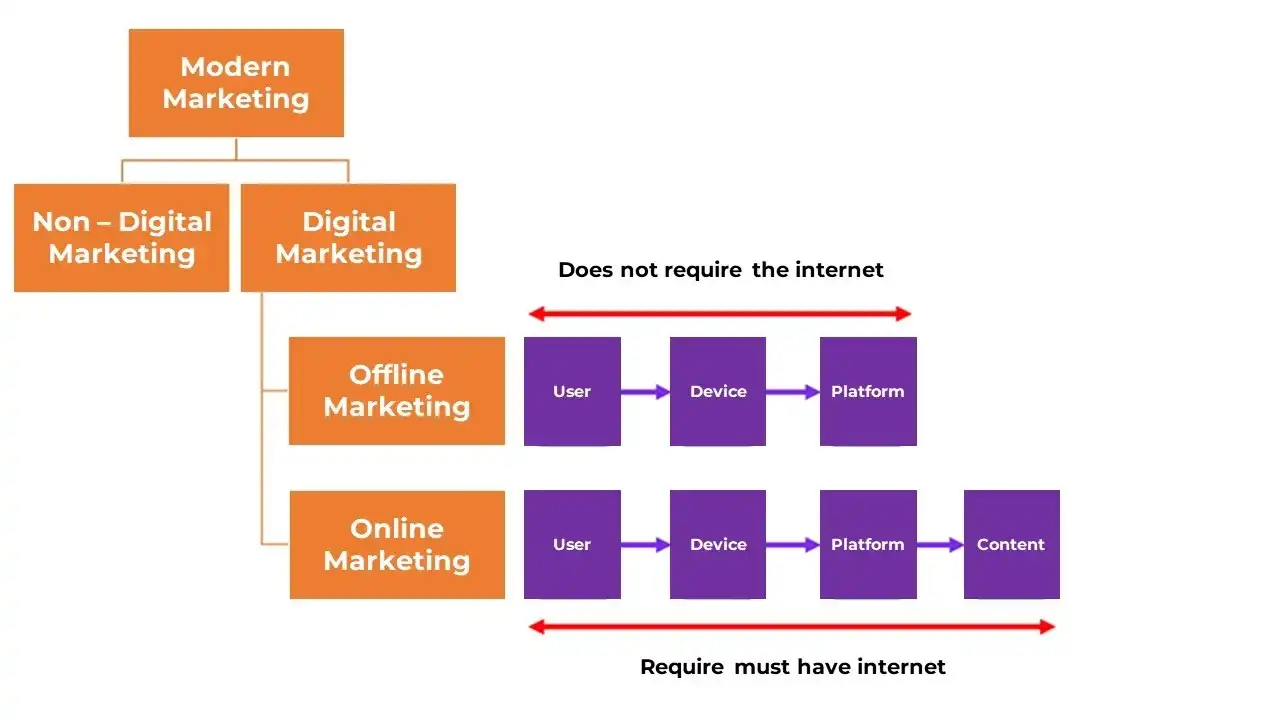
Figure 7: diagram distinguishing between Non – Digital Marketing (regular marketing – no digital) and Digital Marketing (digital marketing)
In summary, we distinguish the following types of marketing:
Non-digital marketing: types of marketing without electronic intervention, such as word of mouth, hand-designed publications, direct interaction with customers, …
Digital marketing: is a type of marketing that involves the intervention of electronic media.
- Digital offline marketing: types of digital marketing without the intervention of the Internet. That is, users only need to go through a certain device to access the content (and this entire process does not require the internet). For example, through the radio, we hear an advertising message, through On TV we can see advertising messages, through LED screens we can see advertising content,…
- Digital online marketing: these types of digital marketing require the intervention of the Internet. That is, the user will use a certain device to access a certain platform and from that platform, the user will be able to access advertising content (and this entire process is required to have internet access). For example, through Smartphones, users access platforms such as Facebook, Google, Zalo, E-Commerce Floor, etc., and from those platforms, they can see advertisements or other information message that the business wants to convey.
6.2. Origin of digital marketing
Many people believe that digital marketing only appeared in the world in the early 2000s. But in fact, it was around this time that digital marketing became widely popular as a term and was further expanded in scope. If you pay attention, that is also the time when e-commerce began to develop with the birth of large companies such as Amazon, Alibaba,…
In 1896, Guglielmo Marconi researched and demonstrated wireless public signal transmission, which was the time when digital began to open up and he was also the inventor of radio.
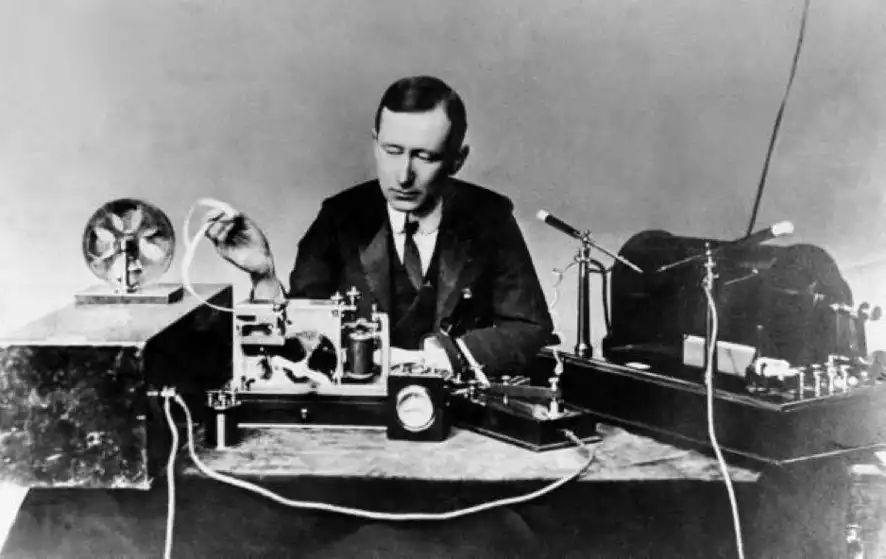
Figure 8: Guglielmo Marconi made the first demonstration of his signaling system for the British government in July 1896. @Wikipedia
Not long after, Marconi began to receive international attention. While it took another 10 years for radio to reach the masses, its creators realized that it could be used to sell goods. Marconi founded The Wireless Telegraph & Signal Company in 1897 and the first live broadcast was from an opera performance at the Metropolitan. Guess what people did after that? They bought tickets!
This is a case of digital marketing that has nothing to do with the internet and Guglielmo Marconi is the first digital marketer in history.
6.3. Components of digital marketing
Digital marketing includes two main channels: digital online marketing and digital offline marketing. Online channels are associated with the internet, and offline channels are associated with electromechanical.

Figure 9: Digital Marketing Categories. @Pham Dinh Quan
6.3.1. What does digital offline marketing include?
Digital offline marketing is divided into 4 main types:
6.3.1.1. Enhanced offline marketing
This is a form of marketing that is completely offline, but enhanced with electronic devices. For example: When you go to the CGV movie center, you will probably be more interested in the electronic screens introducing movies than looking at standees with lackluster prints.
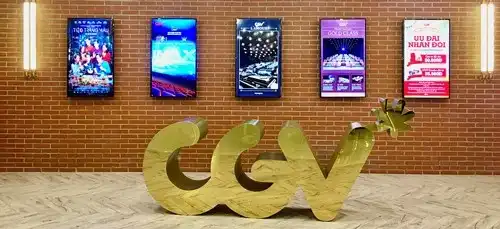
Figure 10: LED screen at CGV Aeon Ha Dong taken by Pham Dinh Quan on October 29, 2020. @Pham Dinh Quan
Three common types of augmented offline marketing are:
- Electronic advertising boards mainly have LED screens (light emitting diodes).
- Digital product demos.
- Digital product samples.
6.3.1.2. Radio marketing
Radio has been one of the most effective marketing channels. Since radio gradually moved to the internet environment, it is no longer a large offline channel like television. You can catch radio stations every day through the ward/commune speakers or while sitting in the car with the radio on according to the frequency. Two common types of radio marketing are:
- Radio advertising.
- Show sponsorship.
6.3.1.3. Television marketing
The first official, pay television commercial was broadcast in the United States on July 1, 1941 on New York station WNBT (then WNBC) before a baseball game between the Brooklyn Dodgers and Philadelphia Phillies.
Television advertising has been around for more than half a century (before color television) and to this day it is still considered an effective advertising channel because most people in rural areas watch television for many hours. everyday.
Television advertising is extremely expensive, it can ‘burn through’ the budget quickly.

Figure 11: advertising price list applied for the time frame from 7:40 p.m. to 6 a.m. on VTV3 television channel in 2015. @Pham Dinh Quan
Common types of TV marketing are:
- Television advertising (TV commercials).
- Sponsoring the program.
6.3.1.4. Phone marketing
Finally, the fastest growing and largest channel for digital offline marketing is telemarketing. Common types of mobile advertising are:
- Cold calling.
- Marketing via text messages in the form of discount codes, gifts, loyalty programs, birthday wishes, etc. (text message marketing).
- QR codes.
6.3.2. What does digital online marketing include?
To date, digital online marketing is divided into 8 main types:
6.3.2.1. Search engine optimization (SEO)
Search engine optimization (SEO) is the process of influencing the online visibility of a website or a web page in the “unpaid results” of a web search engine. Search engine optimization is a set of methods to improve the ranking of a website in the results pages of search engines (most commonly Google).
Those methods include optimizing websites (impacting HTML source code and website content) and building links to pages so that search engines choose the most suitable website to serve Internet searchers. responds to a specific keyword queried by the user. Three common types of SEO are:
- Technical SEO
- On-page SEO
- Off-page SEO
6.3.2.2. Search engine marketing (SEM)
This is a common term but it also causes a lot of debate in the digital marketing industry. Search engine marketing (SEM) is a form of Internet marketing that involves promoting a website by increasing its visibility in search engine results pages (SERPS) through optimization. and advertising.
However, not everyone agrees with this definition. Some people think that SEM is synonymous with PPC. So what components does SEM include?
- SEO (search engine optimization).
- Paid search (paid search advertising) / PPC (pay-per-click advertising).

Figure 12: distinguishing between PPC and SEO. @Pham Dinh Quan
6.3.2.3. Content marketing
Content marketing is a form of marketing that focuses on creating, publishing, and distributing content to an online audience. It is often used by businesses to:
- Attract attention and generate leads.
- Expand customer base.
- Create or increase online sales.
- Increase brand awareness or credibility.
- Join the online user community.
6.3.2.4. Social media marketing
Social media marketing is the use of social media platforms such as Facebook, LinkedIn, Zalo or TikTok to promote products or services.
Today, we are introduced to many social media platforms but they often do not work the same way. Each platform will have its own characteristics to make it different in the eyes of its users.
You also know, Facebook and LinkedIn are not used by us for the same purpose, even though they are both social media platforms. Therefore, when conducting marketing activities on social media, you need to customize your content to suit the context of the chosen platform.
6.3.2.5. Pay-per-click (PPC)
Pay-per-click (PPC) is an internet marketing model in which advertisers pay a fee each time one of their ads is clicked. It’s basically a way to buy visits to a website. Search engine advertising (search engine advertising) is one of the most popular forms of PPC. It allows advertisers to bid for ad placement in a search engine’s (mainly Google) sponsored link when someone searches for a keyword related to a business offering their.

Figure 13: a popular form of PPC on Google. @Pham Dinh Quan
Ad Rank is determined based on six factors, including:
- Bid.
- Ad quality and landing page.
- Ad rank threshold.
- Auction competitiveness.
- Search context.
- Expected impact of your ad extensions and other ad formats.
6.3.2.6. Affiliate marketing
Affiliate marketing (affiliate marketing) is a form of promoting the product or service a supplier wants through online promotion channels (blog, fanpage, group,…) of money-making partners (publisher) to client.
Affiliate marketing is a type of marketing based on the CPA (cost per action) advertising fee model. CPA is the most optimal advertising fee model today based on user actions. The supplier will pay a commission to the publisher when the customer makes a purchase.
6.3.2.7. Email marketing
Email marketing is the use of email to develop relationships with prospects or customers with an appropriate stream of marketing communications. Through sharing useful information and deepening relationships, you can convert leads into customers and drive sales.
This is a form of direct marketing, similar to direct mail marketing, but email marketing is much more effective because of its fast speed on the internet and lower costs. Initially, people interested in your product or service may join your email list.
Then, you will send them valuable advice, update news about your brand, provide them with coupons, recommend similar products, etc. to connect and nurture customers. potential goods.
6.3.2.8. Native advertising
Essentially, native advertising is paid content. Native advertising is a type of advertising where the displayed content matches the interface and functionality of the platform. Therefore, sometimes it is difficult for us to recognize this as an advertisement.
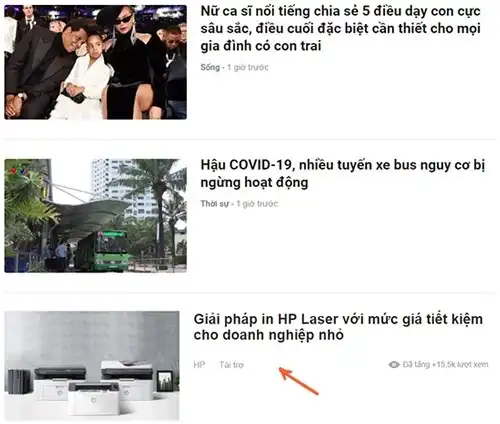
Figure 14: a form of natural advertising. @Pham Dinh Quan
According to the Interactive Advertising Bureau (IAB), native advertising includes 6 main types:
- In-Feed Ads Units: Ads displayed interspersed with other articles on the page.
- Paid Search Units: Paid search.
- Recommendation Widgets: Recommended articles.
- Promoted Listings: Promoted listings.
- In-Ad (IAB Standard): Ads displayed with natural elements.
- Custom Content Units / Can’t be Contained: Custom content or advertising is unlike any other content category.
6.3.2.9. summary
Unbounce has created an interesting infographic that synthesizes all types of online marketing in one neat diagram, as follows:

Figure 15: summary of all types of online marketing. @Unbound.com
Download full, high-quality images here.
7. So what is marketing have to do?
After learning about marketing concepts and analyzing modern marketing types, do you understand what marketing is?
In short, a normal marketer, when doing marketing, will do one or both of the following two main tasks:
- Content creation.
- Content distribution.
Content will usually come in three main forms:
- Written forms (text): are documents used for marketing; the person who creates this written content will be called a copywriter.
- Image format (design, photos): are images and publications designed, created, or edited from old images. The person who makes the image will be called a designer.
- Film format (video, clip): are videos recorded directly or cut and edited from other videos, or even videos introducing designed images. The video maker will be called Video Editor.
Today, two more forms have appeared in the content market, which are audio forms (also known as podcasts) and NFT forms.
Currently, content creators will often possess at least two of the above three skills, and there are even individuals who can excel in all three skills.
After creating content, the marketer’s task is to distribute (communicate, transmit) that content to appropriate audiences (customers).
To be able to distribute content, marketers will use appropriate tools and platforms for the purpose of each different campaign. Those foundational tools are non-digital marketing and digital marketing channels.
- Non-digital marketing channels are types of marketing without electronic intervention. Non-digital marketers will distribute content to users through traditional means such as word of mouth, hand-designed publications, direct interaction with customers, etc.
- Digital marketing channels are types of marketing that involve the intervention of electronic media. Digital marketers will distribute content to users using online or offline digital platforms.
The ultimate purpose of content creation and distribution is to connect with customers (because customers are at the heart of all marketing activities).
But to be able to create and distribute content to the right customers, to the right market, to the right audience,… we must go through many other tasks such as market research, planning, strategy, and planning the customer, ….
That’s why it is said that marketing is the work of an entire department, a collective, not simply an individual, and requires the collective to be extremely cohesive, from Marketing Manager to Marketing Executive, all must be united. Only then can we work effectively.
– End –
Thank you for reading my sharing, hopefully it has brought more or less useful value to you.
- Sky -